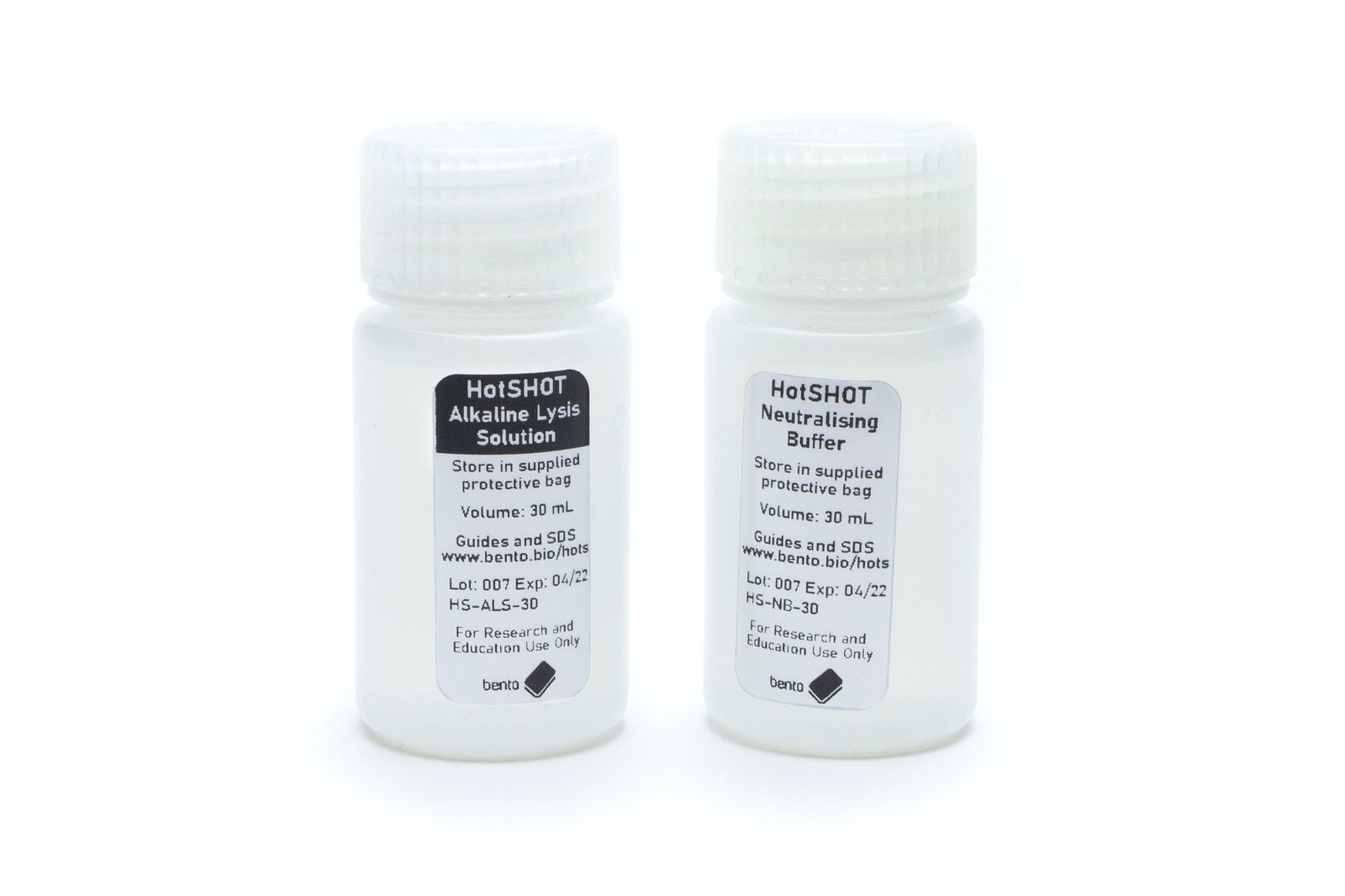
Rapidly extract DNA from a wide range of samples with this widely used method. The HotSHOT DNA Extraction Kit is a simple, two step protocol performed in a single PCR tube.
Rapid: Extract PCR-ready DNA in just 10–30 minutes.
Simple: Single-tube protocol; no spin-columns or centrifuging needed.
Versatile: Validated for a broad range of animal, plant, and microbial tissues.
Economical: Prepares up to 400 samples (only £0.07 per prep).
Scalable: Suitable for high-throughput and automation; easily process 96+ samples.
The HotSHOT DNA Extraction method provides a rapid, cost-effective method for generating PCR-quality DNA from a wide variety of tissues. Originally developed by Truett et al. (2000) for high-throughput mouse genotyping, the method has become widely adopted in many different applications because of its low cost, simplicity, and scalability.
Our HotSHOT DNA Extraction Kit provides the buffers in a stabilized, ready-to-use format with a modified formulation to extend the shelf-life of the product. Suggested target tissues include animal tissues (from mammals to fish to invertebrates), although this protocol has also often been used successfully to extract fungal, plant, and bacterial DNA in a number of studies.
Technical Note: This is a relatively crude DNA extraction method designed for speed. The resulting extract is suitable for PCR, but is not recommended for applications requiring high-purity DNA, such as Next-Generation Sequencing (NGS), or tissue types containing high proportions of PCR inhibitors
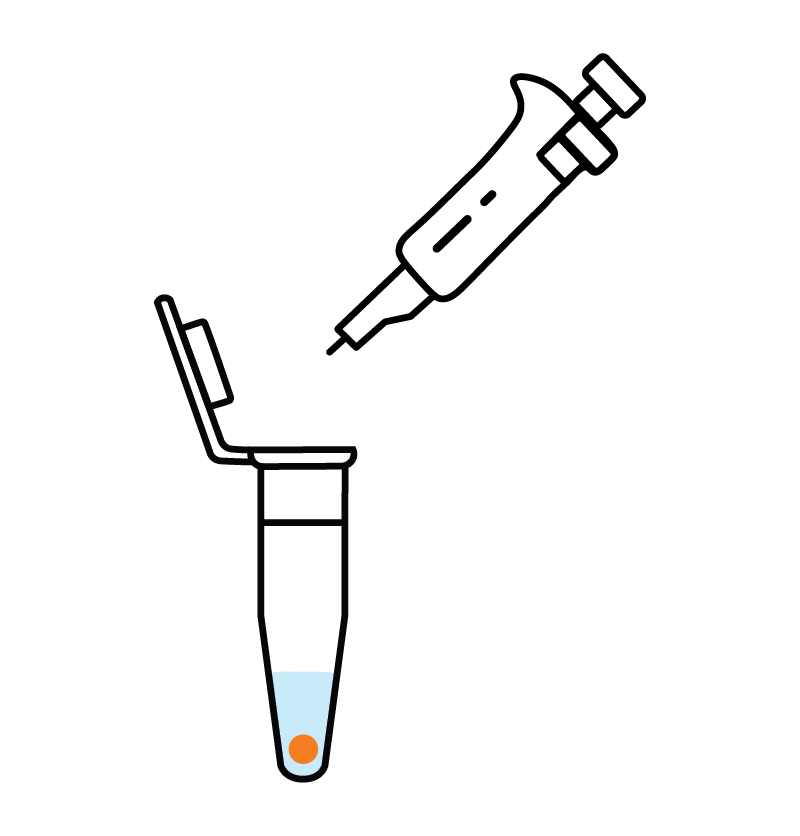
1
Prep
Add Alkaline Lysis Buffer
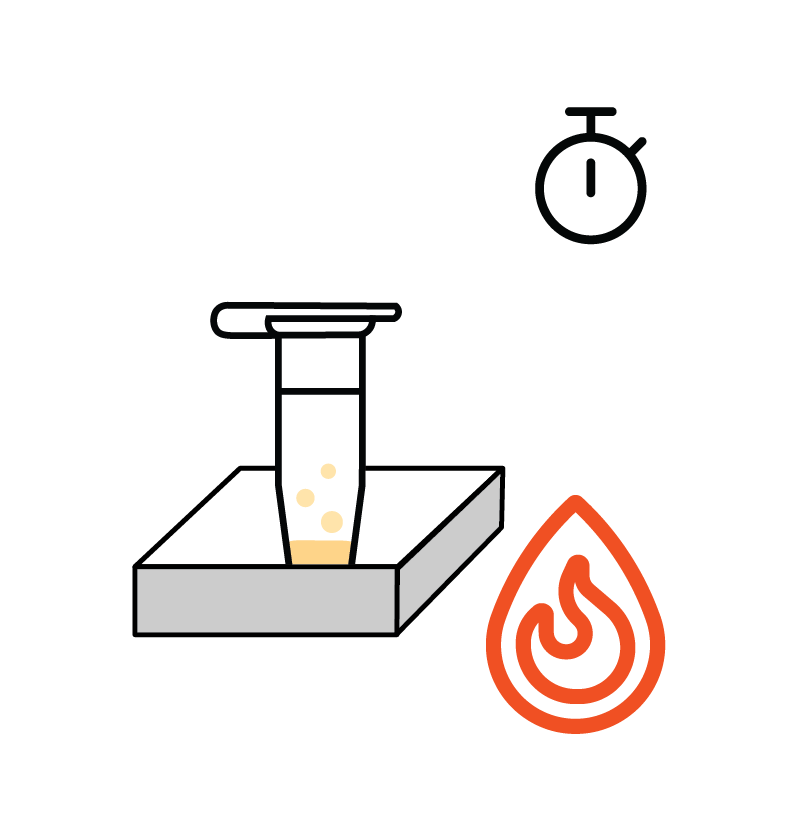
2
Heat
Incubate at 95 °C for 10+ min
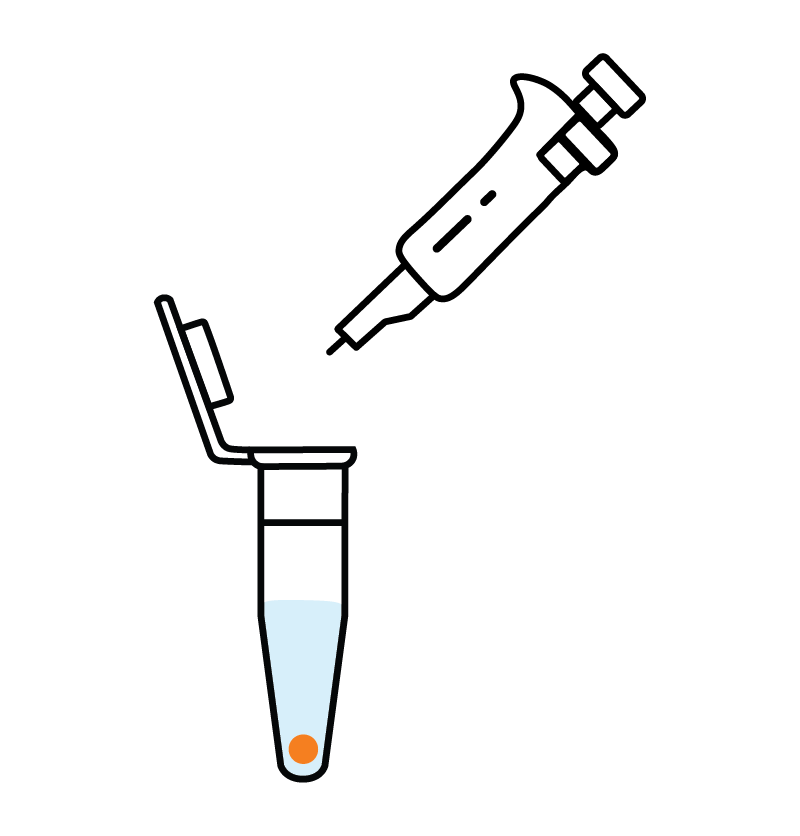
3
Neutralize
Add Neutralizing Buffer
HotSHOT DNA Extraction Protocol
Suggested Use
Add 75 µL of Alkaline Lysis Solution to 1-2 mm3 of a sample in a 0.2 mL PCR tube, and incubate at 95 ºC for between 10 to 30 minutes (depending on sample). Allow to cool and then add 75 µL of Neutralising Buffer.
Use 1–5 µl of DNA extract as a template per 20 µl PCR reaction. For difficult tissues that contain PCR inhibitors (for example plant or fungal tissue, feathers, blood) first dilute 10x–100x in sterile distilled or PCR grade water to dilute PCR inhibitors. Optimal dilutions for a given tissue type can be established in the first instance by testing a range of dilutions.
FAQ
How is our HotSHOT DNA Extraction Kit formulation different from the original protocol?
The original HotSHOT DNA extraction reagents contain an Alkaline Lysis Solution of 25 mM NaOH and 0.2 mM EDTA, which is neutralised after extraction with a Neutralisation Buffer of 100 mM Tris-HCl.
Our HotSHOT DNA Extraction Kit contains 25 mM NaOH in the Alkaline Lysis Solution, and 100 mM Tris-HCl and 0.5 mM EDTA in the Neutralisation Buffer. This modification helps to protect the Neutralisation Buffer from metal-catalysed oxidation, and also slightly inhibits microbial contamination.
The removal of 0.2 mM EDTA from the extraction solution should not noticeably impact the DNA extraction compared to the original formulation.
Can I use HotSHOT DNA Extraction Kit for high throughput tissue DNA extraction?
Yes. The HotSHOT method is ideal for high-throughput workflows because it requires no centrifugation or spin-columns, allowing for rapid processing of 96+ samples at once.
The kit is validated for a wide range of DNA-rich animal, plant, and microbial tissues. However, because it produces a relatively crude extract, it may not be suitable for samples with very high levels of PCR inhibitors.
Is the HotSHOT method compatible with 96-well plates or 8-strip tubes?
Yes, the single-tube protocol is suitable for 0.2 mL PCR tubes and 96-well plates, which makes it easy to scale using multi-channel pipettes.
Is the HotSHOT DNA Extraction Kit compatible with automated liquid handlers?
Yes. Because the protocol is a simple, two-step process (alkaline lysis followed by neutralization) performed in a single tube or well, it is highly suitable for automation. It eliminates the complex vacuum or centrifugation steps required by traditional spin-column kits, making it easy to program on most robotic platforms.
Can the HotSHOT DNA Extraction Kit be used for RNA extraction?
No. The alkaline solution used in the HotSHOT DNA Extraction Kit will degrade and destroy RNA during the extraction process.
Applications
The HotSHOT alkaline lysis method is a well-established protocol for the extraction of PCR-grade DNA from a wide range of sample types, including applications in genotyping, PCR-based assays, sequencing, and DNA barcoding.
Our kit provides a stabilized, ready-to-use format of the protocol originally described in the Key Reference: Truett et al. (2000). While most often used for mammal, bird, and fish tissues, the method is exceptionally versatile and has been validated across diverse taxonomic groups, including invertebrates, animal parasites, and parasite blood meals; zooplanktonic eggs; pollen, and young leaves; and fungal pathogens in plant tissues.
Selected applications across animal, plant, and microbial species
Sample Type
Target Organism
Typical Application
Key Reference
Mammal tissue
Mouse (Mus musculus)
Rapid tail snip genotyping
Truett et al. (2000)
Fish larvae
Gobies (Gobiidae), Cardinalfishes (Apogonidae), damselfishes and clownfishes (Pomacentridae), etc.
High-throughput DNA barcoding / marine biodiversity
Chan et al (2024)
Meroplankton
Bivalves (Bivalvia), Sea slugs and snails (Gastropoda), sea stars and urchins (Echinodermata), and segmented worms (Annelida), etc.
High-throughput DNA barcoding / marine biodiversity
Descôteaux et al. (2021)
Plant leaf
Arabidopsis (A. thaliana)
Genotyping for plant breeding
Huibers et al. (2013)
Plant leaf
Peanut (Arachis hypogaea)
Genotyping for plant disease resistance
Bressano et al. (2025)
Bacterial cultures
Bacillota, Gammaproteobacteria, Bacteriodota, Alphaproteobacteria, and Cyanobacteria
DNA barcoding / microbial diversity
Möller (2024)
Fungal cultures
Zymoseptoria tritici (causal agent of Septoria leaf blotch)
Genotyping for virulence assays
Fagundes et al. (2020)
Case Studies
Mosquito Species Identification & DNA Barcoding
“I am pleased to share feedback from laboratory work conducted last year using the HotSHOT DNA Extraction Kits. The kits were successfully used in our laboratory at LMVR/NIAID/NIH, as well as in our collaborator and partner laboratory at the Malaria Research and Training Center (MRTC), Bamako, Mali.
In both laboratories, the kit was effectively used to isolate genomic DNA from whole mosquitoes (particularly males) and from the legs of female mosquitoes for DNA barcoding applications. PCR amplification was performed using 1 μL of extracted genomic DNA, and the resulting amplicons were used for mosquito species identification through sequencing on the Oxford Nanopore MinION Mk1C platform.
Additionally, we applied this product to extract genomic DNA from field-collected female mosquitoes. The extracted material enabled reliable mosquito species identification as well as determination of blood meal sources in fed specimens. Overall, the kit proved to be efficient, reliable, and well-suited for both laboratory-based and field-derived sample processing workflows.”
Dr. Roland Bamou, National Institute of Health (NIH)*, United States *Affiliation for identification purposes only. These views are personal and do not constitute an endorsement by the NIH or the U.S. Federal Government.
Technical Note: DNA Quality & Yield
The HotSHOT alkaline lysis method is not suitable for applications requiring extraction of large quantities of high-quality unfragmented DNA.
Electrophoresis gels of extracted genomic DNA are likely to be blank, or to show a faint smear of fragmented DNA and RNA, due to the small quantities extracted. However, this will not impact PCR results, making it a reliable choice for high-throughput screening where speed and cost-efficiency are the primary requirements.
Ambient shipping: This kit is shipped at room temperature.
No cold chain required: Because the reagents are chemically stable, there is no need for dry ice or insulated packaging, reducing shipping costs.
Storage & Shelf Life
Storage: Store all components sealed in their original packaging at room temperature.
Stability: Exposure of the Alkaline Lysis Solution to air will gradually decrease the pH and effectiveness of this reagent over time. Storage for up to 6 months at room temperature should have minimal detrimental effects provided the containers and bags are properly sealed.
Long term storage: For kits stored longer than 6 months, we recommend checking the pH level of the Alkaline Lysis Solution before use.
Specifications
Alkaline Lysis Solution: 25 mM NaOH, pH 12
Neutralising Buffer: 100 mM Tris-HCl, 0.5 mM EDTA, pH 8